

Fish Care
Fish Care Guide
As anglers we love and care for our fish and the environment in which they live. Although some fish can be taken (see the Club Rules), catch and release is encouraged to maintain our fish stocks and ensure that good fish remain in the river to be caught again!
The following video from Orvis featuring Tom Rosenbauer gives a brief and easy guide for ethical Catch & Release practices. (There is a longer video at the bottom of this page which gives an overview of the gold standard for fish care).
Key Points to Remember
Use tackle that allows you to play fish hard to get them to the net as quickly as possible.
Where appropriate, use single barbless hooks. When spinning usesingle or double hook (treble hooks are strongly discouraged) – preferably debarbed for all fish but must be barbless for trout.
Keep fish in the net in the water. Holding a fish out of the water leads to pressure on the the fish’s body and it essentially drowning in air. You can get great shots of a fish just below the surface. If you must lift a fish out of the water for a photograph, have the camera ready and shot planned. Then, gently and briefly lift the fish for no more than a couple of secods just above the water and cradling it’s body, take the shot and then lower the fish back into the water immediately. Remember, squeezing fish damages their intermal organs and the odds of survival are increasingly reduced with every second out of the water.
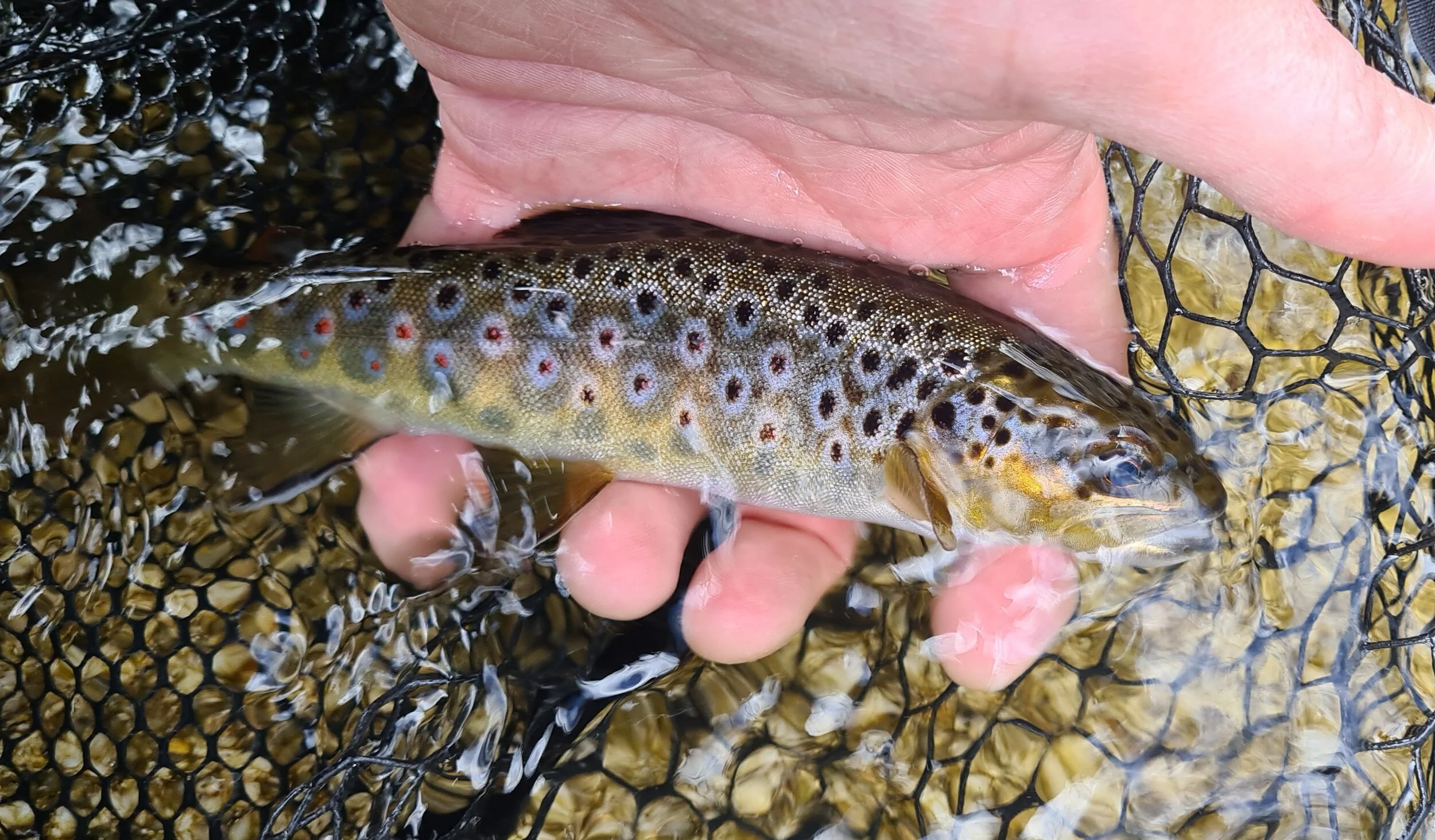
Gently supported underwater for the shot
Always use wet hands to handle fish. Ideally from underneath the net, using a net as a barrier between your hand and the fish.
Unhook the fish underwater in the net wherever possible. Turning a fish upsidedown can bring about a state of tonic imobility making the fish relax. If hooked deep, snip off and let the fish swim away. There is a very good chance that your hook will come out and be spat out by the fish later.
Allow the fish to fully recover before releasing it. If the fish doesn’t swim away immediately, gently hold the fish facing into the current (but out of the main flow) and allow the fish to swim away under it’s own steam from the net or your hand.
The Angling Trust have also put together a great guide here.
The KeepFish Wet website is another excellent resource and a fantastic moto to live by to support the welbeing of the fish you catch and release.
Water Temperature
When fishing for brown trout, sea trout and salmon it is very important to be mindful of water temperatures, so it is a good idea to carry a fishing thermometer. Water temperatures over 18C lead to less oxygen in the water meaning that fish will become sluggish and fishing is likely to be very hard work and frustrating. In addition, salmonids, including salmon and trout, are far less likely to recover from the exertion of a fight with an angler if the water is too warm if you are fishing Catch and Release we would strongly encourage members not to fish our beats if water temperatures are above 18 Celsius. If members do decide to fish, get the fish to the net, keep them in the water and release them as quickly as possible.
The following video demonstrates the gold standard in for catch and release and fish care when fishing for salmonids: